
Project Silica: The Next Generation Information Storage
On this page
Recently, I’ve heard about a very interesting project: Project Silica. The reason that it interests me is that this is a project to help us preserve our data for a thousand years without any difficult conditions. Let’s dive into the details of this project to understand some aspects and imagine what the future of this project looks like.
Evolution of Storage
Thousands of years ago, in order to preserve information, humans carved it into stone or pressed it into clay tablets. This method was incredibly durable; we can still read the Code of Hammurabi carved on a stone stele from nearly 4,000 years ago. It required no electricity, no software updates, and resisted the elements beautifully. But while durability was high, the storage capacity was terribly low. Imagine wanting to store a standard book of about 75,000 words—you would need tons of heavy rocks, and the carving process required immense physical labor.

As time went on, driven by the development of craftsmanship and a growing demand for data preservation, we eventually invented paper. It was a true game-changer. Suddenly, we could store vast libraries of ancient history, early sciences, and literature. Paper was lightweight, easy to write on (requiring none of the physical force needed for stone), easy to carry, easy to share, and easy to copy. For the first time, knowledge could be spread widely while the original copy was safely kept. Even today, paper remains one of our most trusted methods for storing human knowledge.
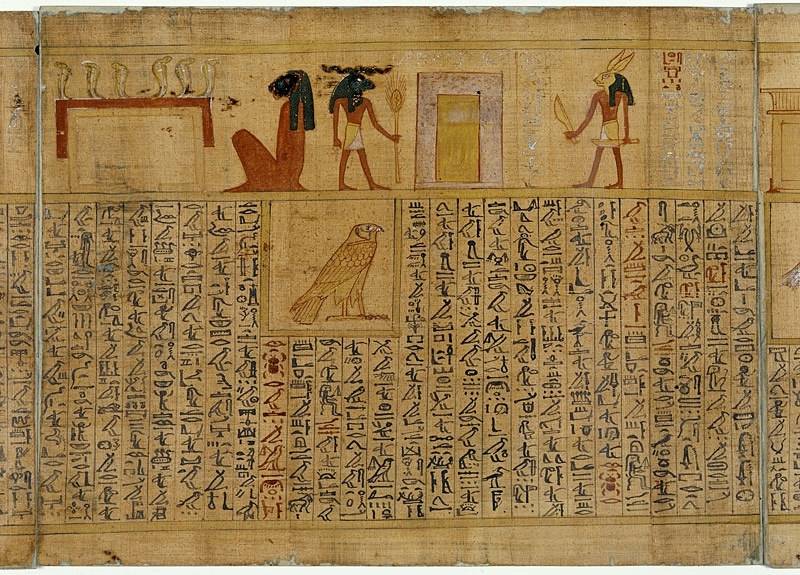
However, paper has a major disadvantage: it requires very specific environmental conditions to survive. Without proper preservation, it can easily be destroyed by fire, water, insects, or simply time. Furthermore, while paper drastically improved our storage capacity, the sheer volume of human knowledge was growing too fast. Eventually, even paper wasn't enough to hold it all.
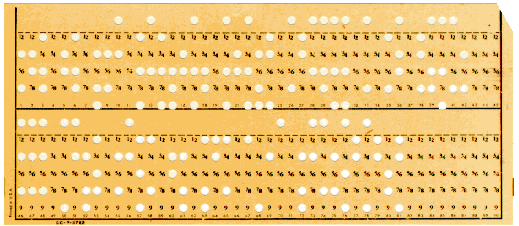
In the 1800s and early 1900s, as textile looms and early mechanical computers began to emerge, humans needed a way to feed data into machines automatically. Writing on paper with ink was simply too slow for a machine to read. To solve this, engineers invented Punch Cards—stiff sheets of paper or cardboard with holes punched into them by hand or machine. If there was a hole, the machine read it as a "1"; if there was no hole, it was a "0". This was the very birth of binary code. While it allowed massive tasks like the US Census to be processed in months instead of a decade, a single complex software program still required rooms full of heavy cardboard boxes.
By the 1950s, the digital computing boom truly began, and people quickly realized the limitations of punch cards—they were far too bulky. IBM revolutionized storage by introducing electromagnetism, discovering that they could record data by rearranging magnetic particles on physical surfaces. This breakthrough gave birth to Magnetic Tape reels and the very first Hard Disk Drive (HDD) in 1956. However, these early HDDs were massive, expensive, and completely stationary—they anchored the data to a single room.

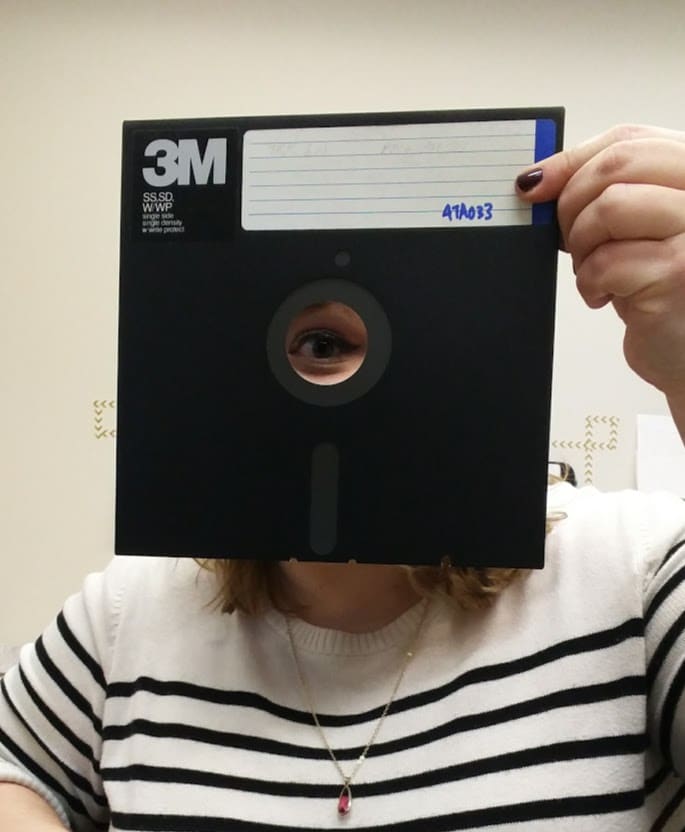
Because those early hard drives couldn't move, computer users in the 1970s and 80s faced a brand-new problem: How do we share a file with someone in a different building? To solve this, engineers invented the Floppy Disk. It used the same magnetic technology as an HDD but shrunk it down into a thin, flexible plastic disk housed inside a portable square sleeve. The iconic 3.5-inch floppy disk maxed out at just 1.44 MB of data, but it allowed individuals to carry software, games, and documents right in their pockets. It became so culturally significant that even today, it remains the universal digital icon for the "Save" button.
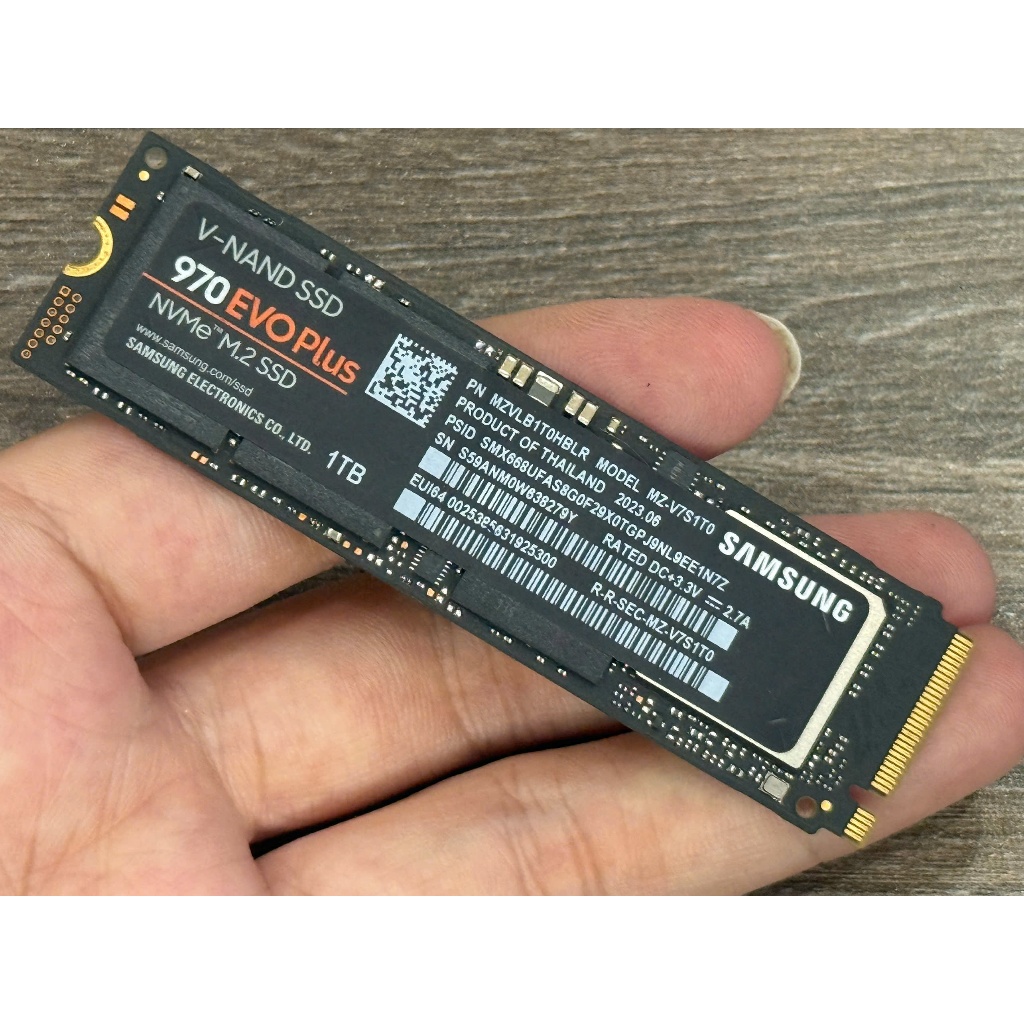
By the late 1990s, file sizes completely outgrew the floppy disk. Humanity shifted toward Optical Disks (CDs and DVDs), which used lasers to read microscopic pits etched onto a reflective surface. Eventually, we transitioned to modern Silicon Flash Memory (SSDs and USB drives), which trap electrical charges inside microchips. Today, billions of these compact SSDs and heavy-duty magnetic tapes hum away inside massive data centers, forming the invisible infrastructure we call "The Cloud."
The Problem
Today, we view "the cloud" as an infinite, magical digital ether. We upload our photos, stream our movies, and backup our entire lives to it without a second thought, assuming it will always be there. And to be fair, the cloud possesses extraordinary, world-changing advantages:
Unmatched Convenience: You can access data instantly from any device, anywhere on Earth, as long as you have an internet connection.
Infinite Scalability: If a company needs more storage space, they don't need to construct a new brick-and-mortar warehouse; they just virtually rent a few more petabytes of data center space with the click of a button.
Global Redundancy: Cloud providers back up your data across multiple servers globally, so if one hard drive crashes, another seamlessly takes its place without you ever noticing.

But behind this frictionless digital curtain lies a terrifying, expensive reality. The cloud isn't a cloud at all; it is a sprawling network of concrete warehouses packed with billions of spinning mechanical hard disk drives (HDDs), silicon microchips (SSDs), and massive reels of magnetic tape.
And this leads us straight to the cloud's fatal flaw: its media are deeply temporary.
[ THE HARD TRUTH OF THE CLOUD ]
Modern SSDs & HDDs      ---> Fail or degrade in 3 to 5 years.
Industrial Magnetic Tape ---> Degrades or warps in 10 to 20 years.
Because of this rapid physical degradation, modern data centers are trapped in a relentless, exhausting cycle known as "data migration." Every few years, automated systems must constantly rewrite zettabytes of data from aging, dying drives onto brand-new ones before the old media rot away.
This creates three massive crises for humanity:
High Risk of Loss: If a data center suffers a sustained power failure, a cooling system meltdown, or a magnetic anomaly during a migration phase, centuries of priceless human history, medical records, and digital assets could be wiped out instantly by entropy.
Environmental Destruction: Keeping billions of hard drives constantly spinning and cooling them with massive AC units consumes astronomical amounts of electricity, leaving a staggering global carbon footprint.
Financial Unsustainability: The sheer cost of electricity, physical space, and constantly buying new hardware just to keep existing data alive is growing exponentially.
We have built the most advanced digital civilization in human history, but we are writing its permanent records on digital paper that is actively decomposing. We are losing the war against time.
This systemic vulnerability is precisely why Microsoft Research stepped in. They realized that to protect humanity's collective knowledge, we had to stop relying on magnets and electricity. We needed a medium as permanent as the stone tablets of our ancestors, but with the capacity of the digital age.
They found the answer in a piece of glass.
The Solution: Writing with Lasers in Glass
Project Silica, spearheaded by Microsoft Research, tackles this problem by throwing out magnets and disks entirely. Instead, they store data inside small, square platters of quartz glass—about the size of a standard drink coaster.
This process is a masterpiece of modern physics and can be broken down into three elegant steps:
1. Write
A highly precise, ultrafast laser (called a femtosecond laser) fires incredibly short pulses of light into the glass. Instead of just burning holes or melting the surface, it permanently alters the physical structure of the glass at a microscopic level, creating tiny 3D shapes called voxels (volumetric pixels).
2. Read
To read the data back, a computer-controlled microscope shines polarized light through the glass platter.
3. Decode
Because the microscopic voxels twist and bend the polarized light in highly unique ways, advanced artificial intelligence (AI) algorithms can read the resulting light patterns and instantly translate them back into pristine digital files.
Unlike a traditional CD or DVD where data is merely scratched onto the delicate outer surface, Project Silica stores its data safely inside the glass matrix, stacked hundreds of layers deep. Because of this dense three-dimensional architecture, a single, palm-sized glass slide can hold multiple terabytes of data.
[Femtosecond Laser] ---> Etches microscopic 3D shapes (Voxels) inside the Glass
                                                                 |
[Polarized Light Microscope] <--- Reads the twisted light paths <--+
                                 |
[AI Decode Algorithms] --------> Translates patterns back into binary data (0s and 1s)
Defeating Entropy: The Indestructible Medium
What makes this project truly mind-blowing is how incredibly durable this glass is. To test its limits, the research team at Microsoft subjected these data-filled glass slides to a gauntlet of extreme environmental hazards to see if the files would corrupt. They:
Baked them in industrial ovens at scorching temperatures ( ).
Boiled them in water.
Microwaved them at high power.
Scraped them aggressively with abrasive steel wool.
The result? The data remained completely intact and perfectly readable.
Because quartz glass is fundamentally a highly stable crystalline structure, it doesn’t decay over time, cannot be wiped by electromagnetic pulses, and completely bypasses the fragile vulnerabilities of modern technology. It eliminates the need for expensive, energy-guzzling, climate-controlled server rooms. Instead, these glass slides can sit quietly on a regular shelf in a normal room for thousands of years—preserving humanity's footprint without requiring a single watt of electricity.
The First Step: Proof of Concept
To prove that this technology wasn't just a theoretical lab experiment, Microsoft Research partnered with Warner Bros. for a historic real-world test.
Entertainment giants like Warner Bros. own vast catalogs of human culture—classic films like Casablanca, 1940s radio shows, and modern blockbusters. To safeguard their archives today, they have to proactively migrate their content every three years to stay ahead of digital drive degradation. They even create a backup "third copy" by converting digital film back onto three separate cyan, magenta, and yellow analog film negatives just to ensure it won't fade. It is an exhausting, expensive process.
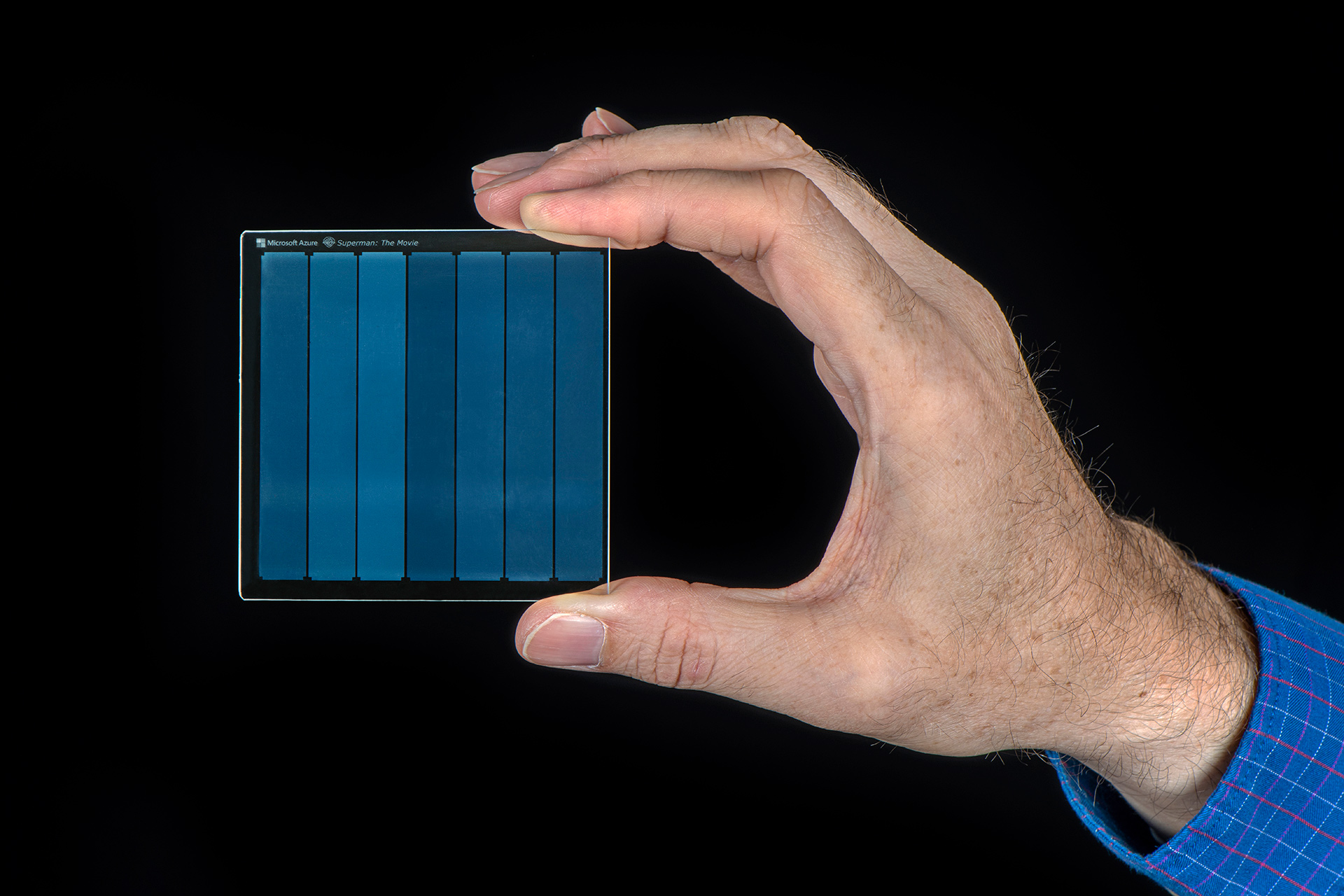
To test if Project Silica could solve this, Microsoft successfully encoded and read back the entire iconic 1978 Superman movie onto a single piece of quartz glass.
The physical specifications of this historic test were mind-blowing:
The Size: A tiny square measuring just 75 x 75 mm and only 2 mm thick—roughly the exact size of a kitchen drink coaster.
The Capacity: It successfully crammed 75.6 GB of data into that tiny glass sliver, with plenty of room left over for error redundancy codes.
By successfully storing and retrieving the Man of Steel from a piece of quartz glass, Microsoft and Warner Bros. proved that cultural preservation no longer has to be a continuous, high-maintenance battle against time. We can now write a masterpiece once, place it on a shelf, and know it will survive perfectly for a millennium.
The Future
Because the glass plates require zero electricity to maintain, the future of data centers looks entirely different. Imagine a vast, dark archive room filled with rows of glass shelves. Because the data is "cold" (meaning it is archival data that doesn't need to be accessed instantly every second), there is no need for humming servers or massive cooling fans.
Instead, when a user requests an archived file—like a centuries-old medical record, a historical text, or a classic movie—a small, highly efficient robot will slide along a grid, grab the specific glass platter, and slide it into a reader. Once the file is fetched, the robot puts it back, and the power drops back down to zero.
This architecture will massively reduce the carbon footprint of global data storage, transforming the cloud into a truly green, sustainable repository.
To see this incredible robotic library in action and learn more about the engineering details, you can explore Microsoft's official project page:
Read more: Microsoft Research: Project Silica
Get new signals by e-mail
A short note when something new is published. No noise, and you can leave with one click.
More signals

Understanding the Singleton Pattern: From Core Concept to Thread-Safe Java
Discussion